Super Plant logo

Sustainable Agriculture

Smart Polytunnel Development for resilient cultivation.

SuperGreen develops structured polytunnel programs to improve crop consistency, protect growing cycles, and support year-round agricultural productivity under changing climate conditions.
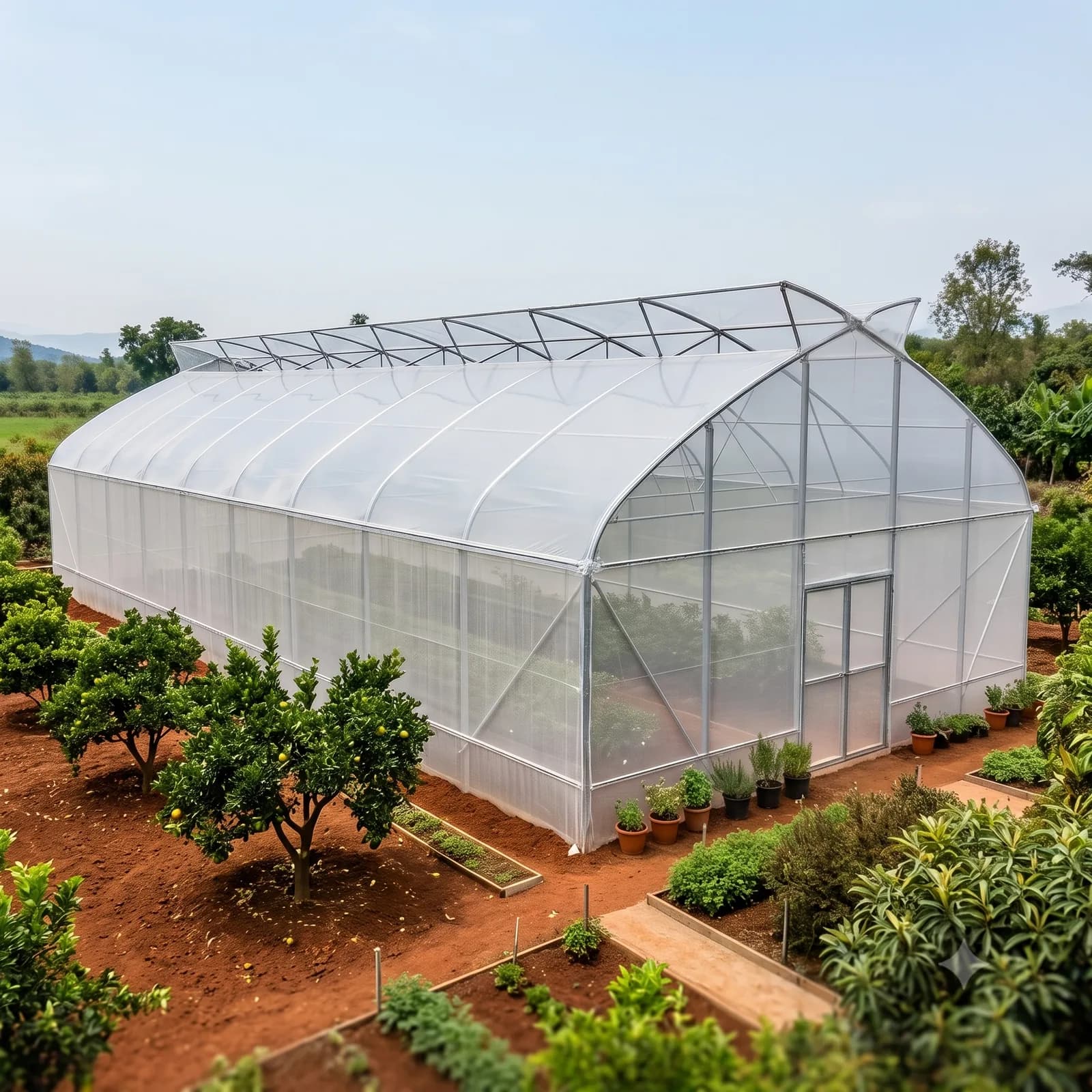
Smart polytunnel development greenhouse

Smart Polytunnel Zone

Why Smart Polytunnel Development

Polytunnel systems create a controllable growing environment that helps reduce environmental stress and stabilize farm operations across variable seasons.

Our development model combines site planning, infrastructure execution, crop strategy alignment, and continuous monitoring support.

Core Capabilities

  • Climate Buffering: Polytunnel structures reduce weather volatility and protect crop cycles during seasonal stress.
  • Water Discipline: Drip-ready layouts and moisture control workflows improve irrigation efficiency per plot.
  • Higher Yield Windows: Controlled environments support longer production windows and more predictable output quality.
  • Operational Visibility: Data checkpoints and field reporting help teams make faster, evidence-based cultivation decisions.

Implementation Flow

Phase 01

Site and Crop Assessment

Evaluate land conditions, crop goals, and climate exposure for optimal setup.

Phase 02

Polytunnel Construction

Deploy structural frames, cover systems, irrigation pathways, and ventilation plans.

Phase 03

Managed Cultivation

Run crop cycles with monitoring, optimization, and milestone-based field operations.

Main Types of Polytunnels

Different tunnel formats support different farm sizes, crop profiles, and operational budgets. Below are the main types used in practical sustainable agriculture development.

Single-span polytunnel

Type 1

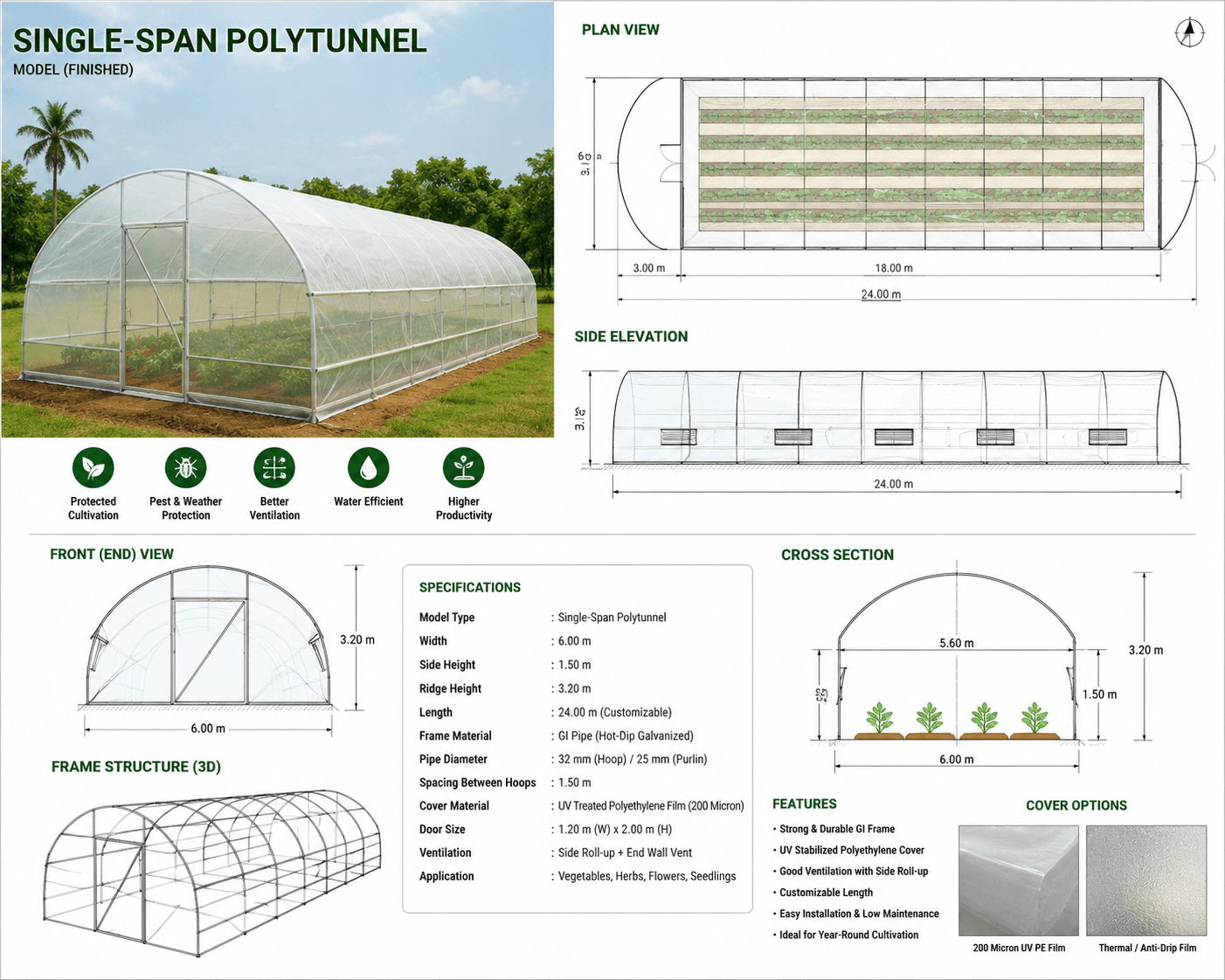
Single-span polytunnel

  • One tunnel with one roof span
  • Simple and relatively low-cost
  • Good for vegetables, herbs, seedlings and small farms
Multi-span / Gothic polytunnel

Type 2

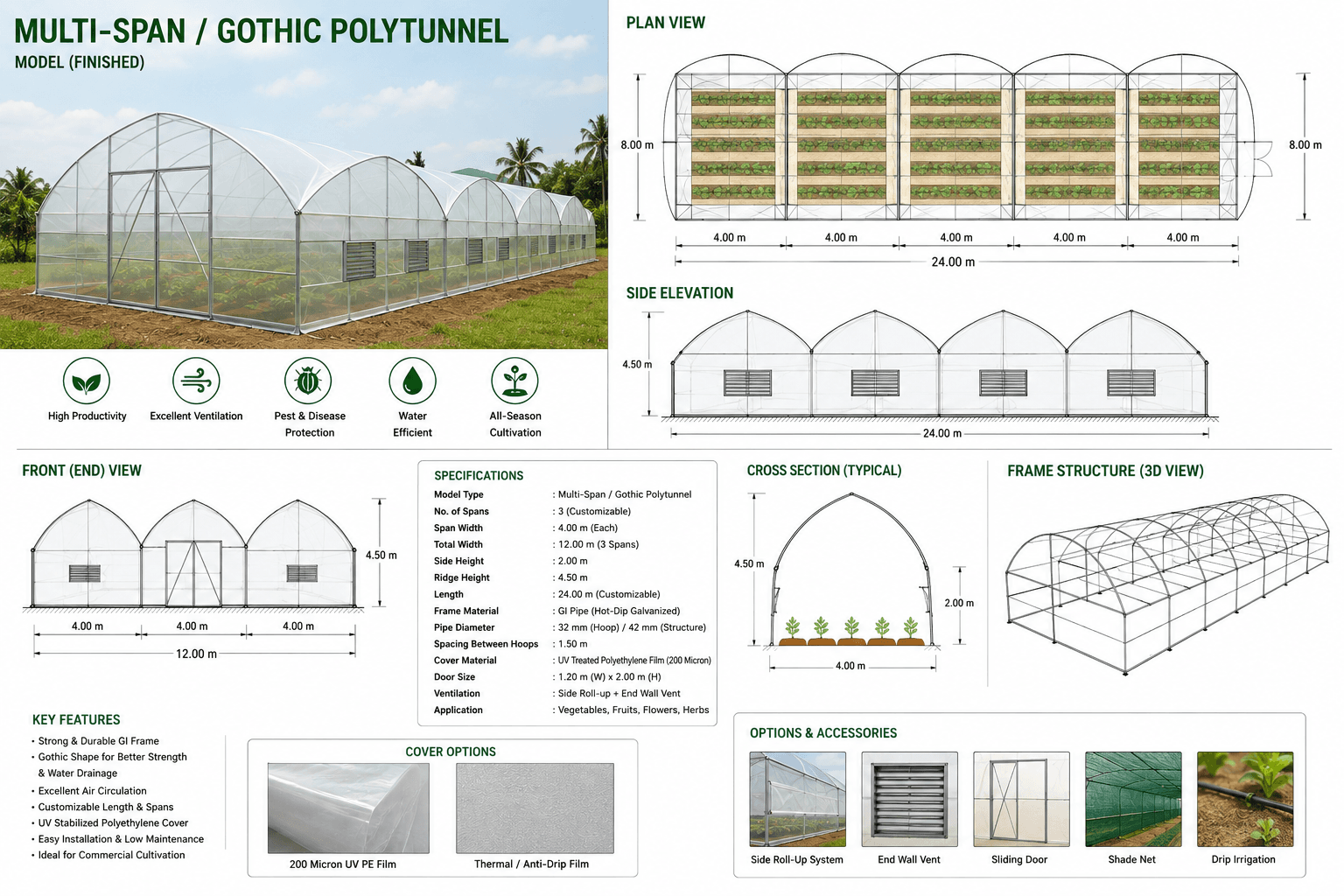
Multi-span / Gothic polytunnel

  • Several connected spans
  • Larger production capacity
  • Better use of land
  • Suitable for commercial farming

Type 3

High-tunnel / Walk-in tunnel

  • Taller structure that allows people and equipment to work inside
  • Good ventilation and easier crop management

Type 4

Low tunnel

  • Small tunnels placed directly over crop beds
  • Mainly used for protecting young plants from weather and pests
  • Low-cost option

Type 5

Net-house / Insect-proof tunnel

  • Uses insect mesh instead of conventional plastic film
  • Excellent for reducing insect pressure
  • Useful for nurseries and sensitive crops

Type 6

Climate-controlled polytunnel

  • More advanced system with ventilation, irrigation, sensors, cooling/fogging and sometimes automated control
  • Suitable for high-value commercial crops